In this week’s blog, I am evaluating two educational tools that are designed to teach about misinformation and the ways in which it can be created and spread.
RumorGuard
Upon first glance into RumorGuard’s website, this is the front page that appears
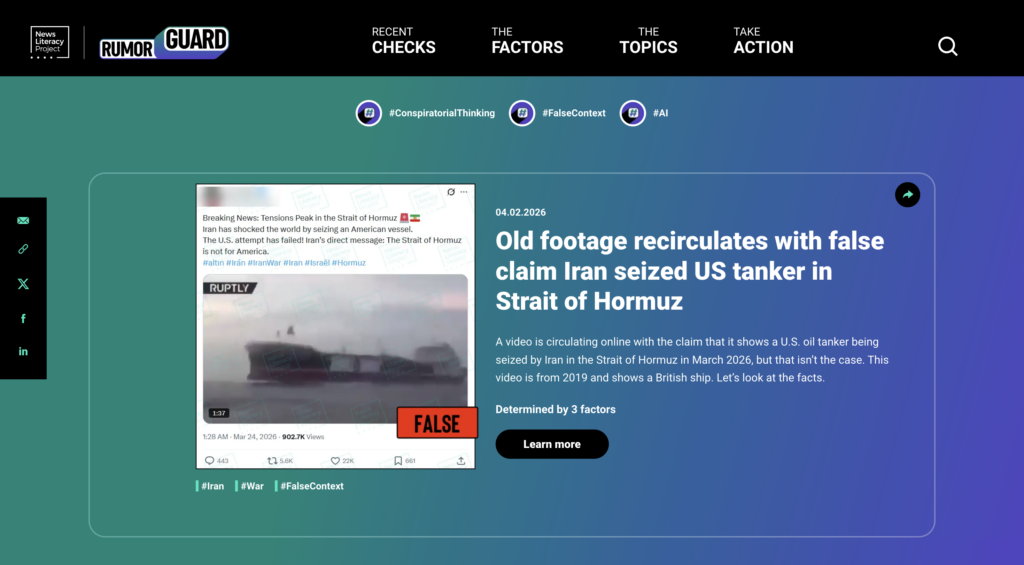
The first article about an Iran seizure caught my attention, so I clicked on it. The article immediately explains that an old video of a British ship from 2019 recirculated, and how the clip is being falsely claimed to be A U.S. oil tanker that is being seized from Iran.
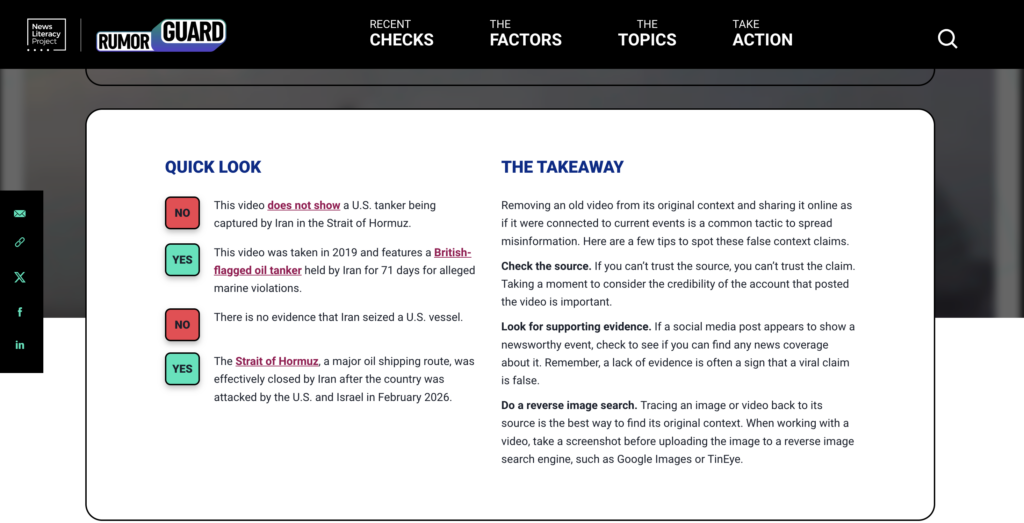
As I scrolled down, RumorGuard gives some more facts, as well as a very clear quick and simple explanation of how this is misinformation, and what someone can do in order to be more careful when seeing this kind of social media post.
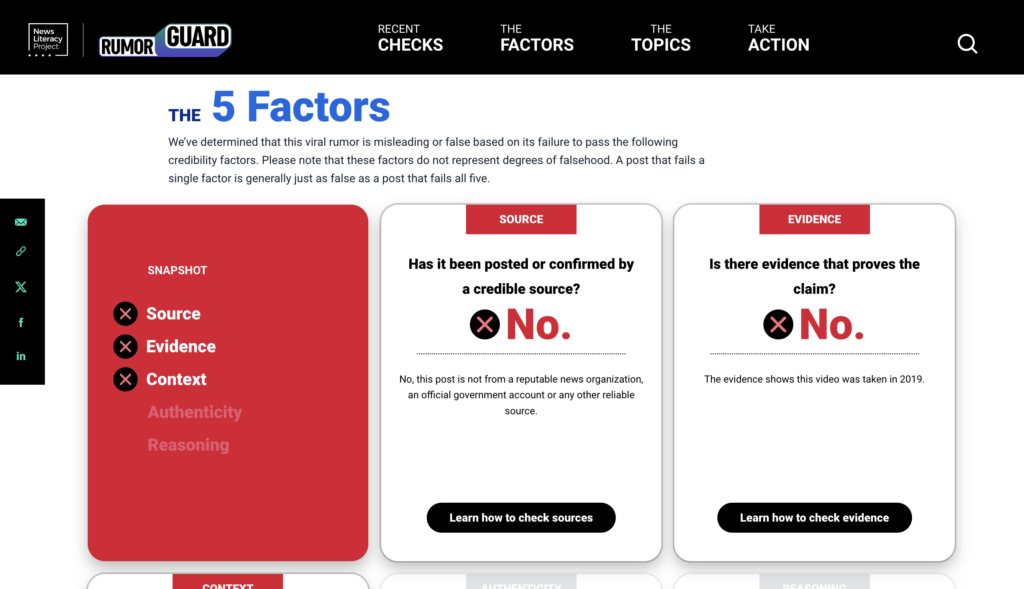
Further down, the website lists the 5 factors that determined how this rumor is misleading or false, and even includes A Reuters’ article specifically talking about this post, and how it isn’t displayed accurately.
The pages at the top of the screen, such as “Recent Checks” or “The Topics,” are ways to bring someone immediately to a certain category of story that they can read about.
Overall, RumorGuard has a large amount of these kinds of deep-dives into false stories and information that help a person determine what to look for and how to be more careful with the spread of this misinformation. All you have to do is click on any of their headlines, and it instantly brings you to the story and lists just like in the Iran example above. This article from Mashable titled, “New debunking site might be the winning tool in those frustrating Facebook fights,” goes into detail about RumorGuard, and some of their personal goals and missions. Alee Quick, a civic marketing manager for the News Literacy Project, talks about how RumorGuard is meant to empower people in order to feel comfortable having hard conversations with family or friends when misinformation comes up. From my scrolling through RumorGuard, it is very effective in teaching participants about misinformation and diving deeper into the “why.” While this tool is great for individual use, there is still so much information incorrectly spreading via social media or word of mouth. By letting more people know about websites such as this one, it can help prevent the problem of “believing everything you see.”
Bad News
Bad News is a unique game where the player acts as an anonymous person online who purposefully and knowingly spreads misinformation. By being in this sort of role, players learn different techniques and ways in which this spread can occur.
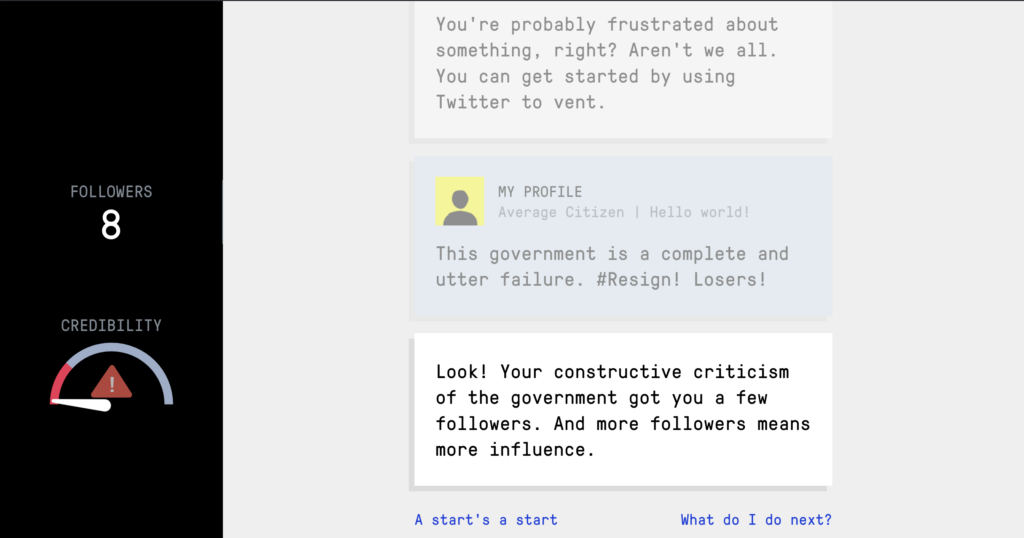
To begin, it starts off with the player choosing a topic on Twitter to make a constructive criticism post in order to gain traction and attention. While the player doesn’t have many followers in the beginning, Bad News shows how easily that can change.
As the player moves to the next phase, the game has them steal someone else’s credibility. In this case, I chose to pose as Nickelodeon and post a tweet that “SpongeBob is being cancelled. “
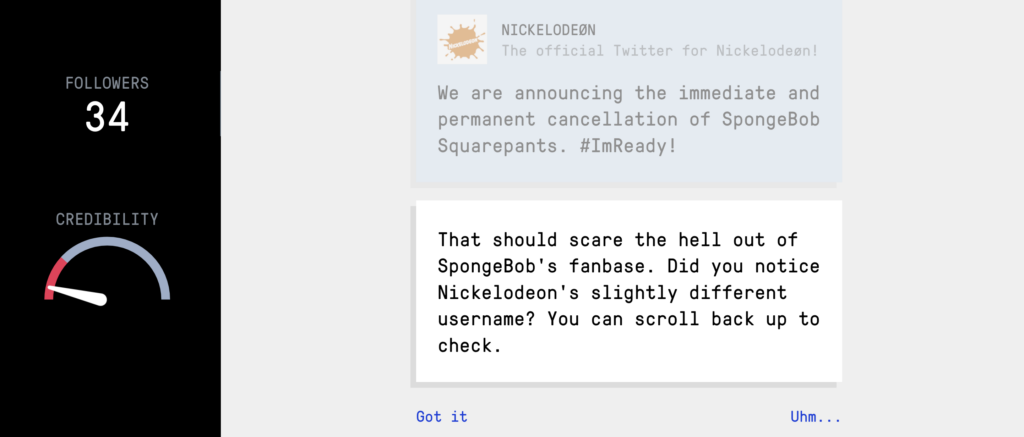
Our post worked, and now we have more followers that are becoming reactive about the false story that SpongeBob is getting cancelled. While some people may have noticed the fake account with a slightly different name, others did not, and are now sharing their thoughts about the tweet.
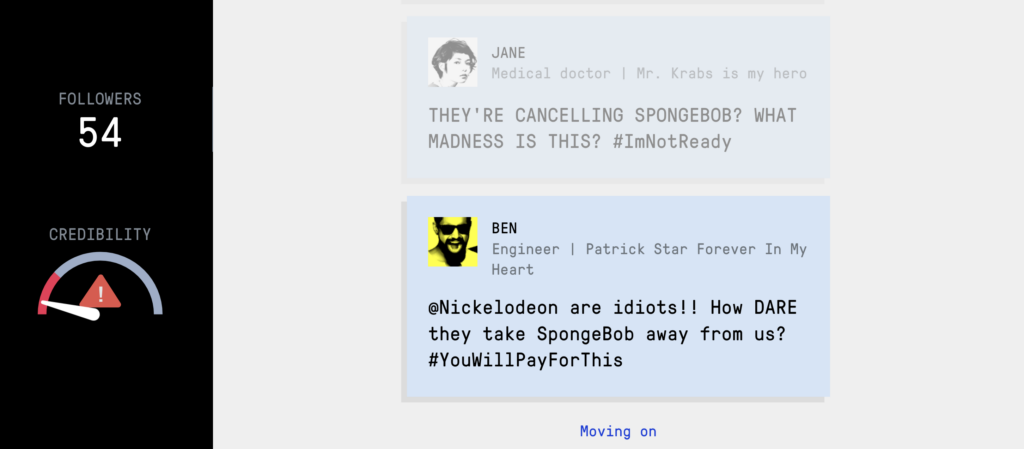
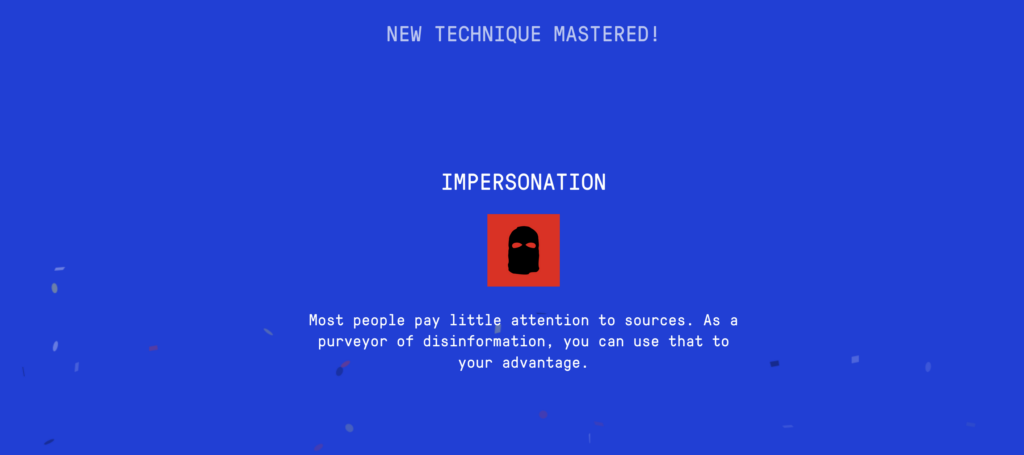
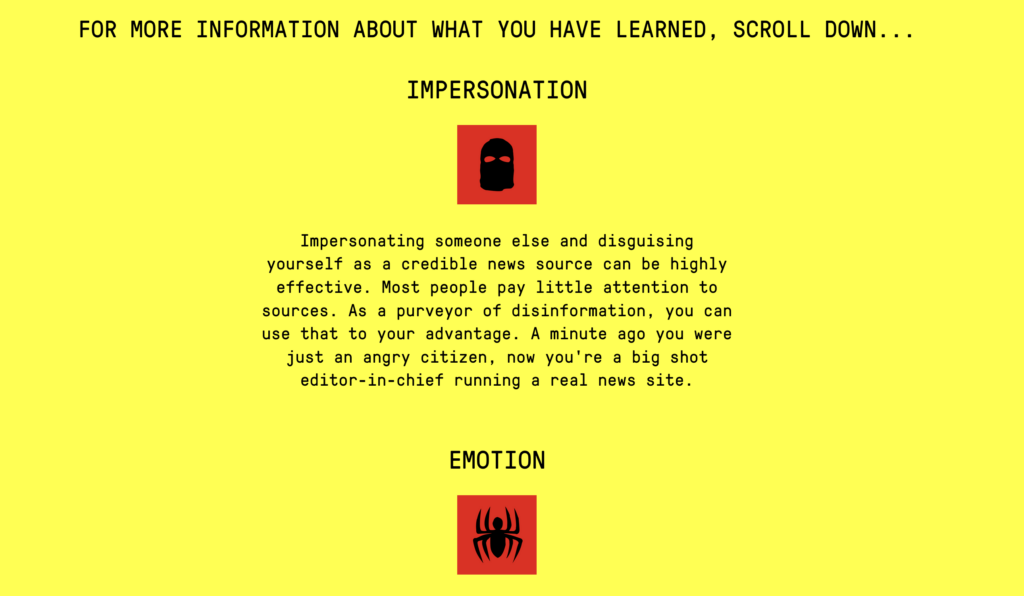
The further into the game, the more a player starts to gain “credibility” within social media. Here, I mastered the Impersonation portion and found out how misinformation can spread from people pretending to be someone, or an organization they are not. The completion page specifies how most people are not paying attention to the fake sources I posted.
Bad News has the player go even further, until they cover all the ways misinformation can spread. From impersonation to trolling, it allows the player to gain an understanding of what each category means through acting like the “bad guy.”
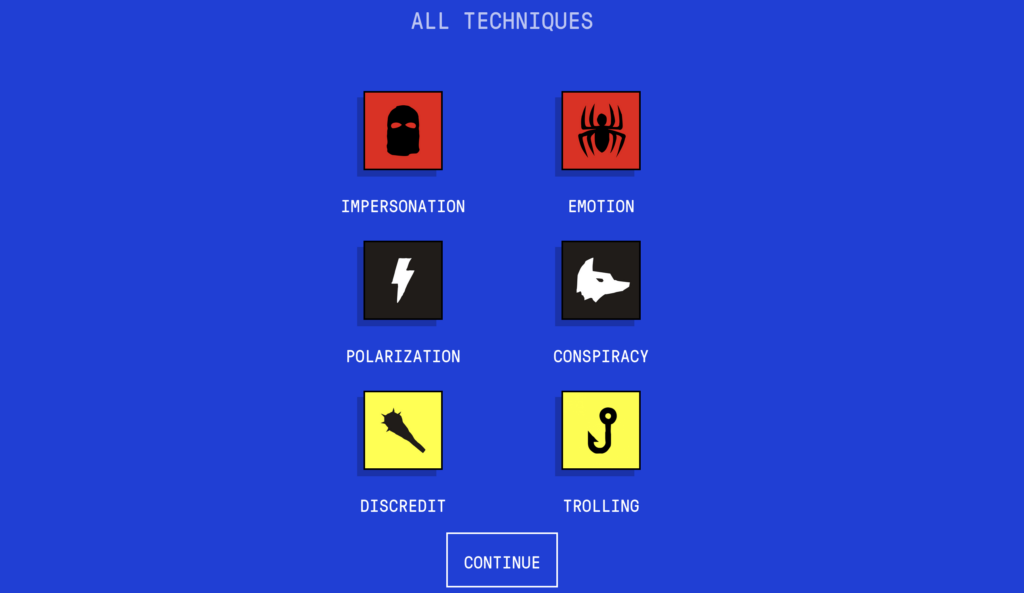
After all the techniques are completed, Bad News gives the player a score and recap where you can read through what all the techniques mean one more time to lock in what has been learned.
Why do Americans share so much fake news? is an article that reiterates what Bad News was explaining in the game. Much like in the fake Nickelodeon post about SpongeBob, the article talks about how people do not pay attention to the accuracy of the content they are viewing. Small missteps such as this can lead into a giant spread of false or fake news. My conclusion from playing this game is how easy it is to gain traction and trick people into believing that anything can be real. This game was very effective in learning about the techniques people use and how to spot an article that may be using one of these tactics. It was also an immersive game that kept me wanting to go further to see how many “followers” I could gain, and what kind of crazy things I could post and still be viewed as credible. Bad News is a useful tool for someone who might be unaware of the ways misinformation can spread. It is a great introduction into the world of digital misinformation, that can guide someone into taking the next steps to becoming more careful and start fact-checking what they see.